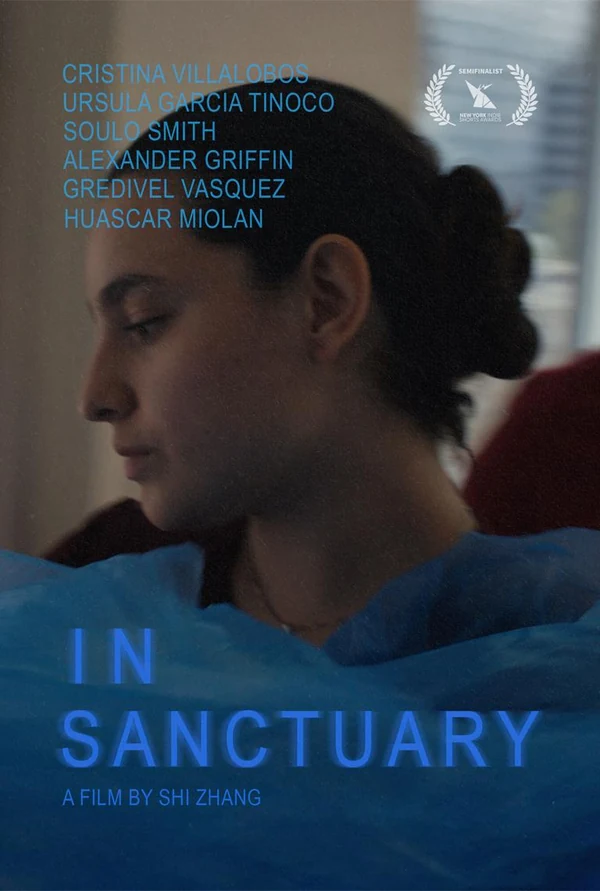
What In Sanctuary is about
Camila has just arrived in New York. She finds work as a hotel maid, and from there she is trying to do two things at once: hold on to the job, and send money home. The film is about what she has to give up in order to keep doing both.
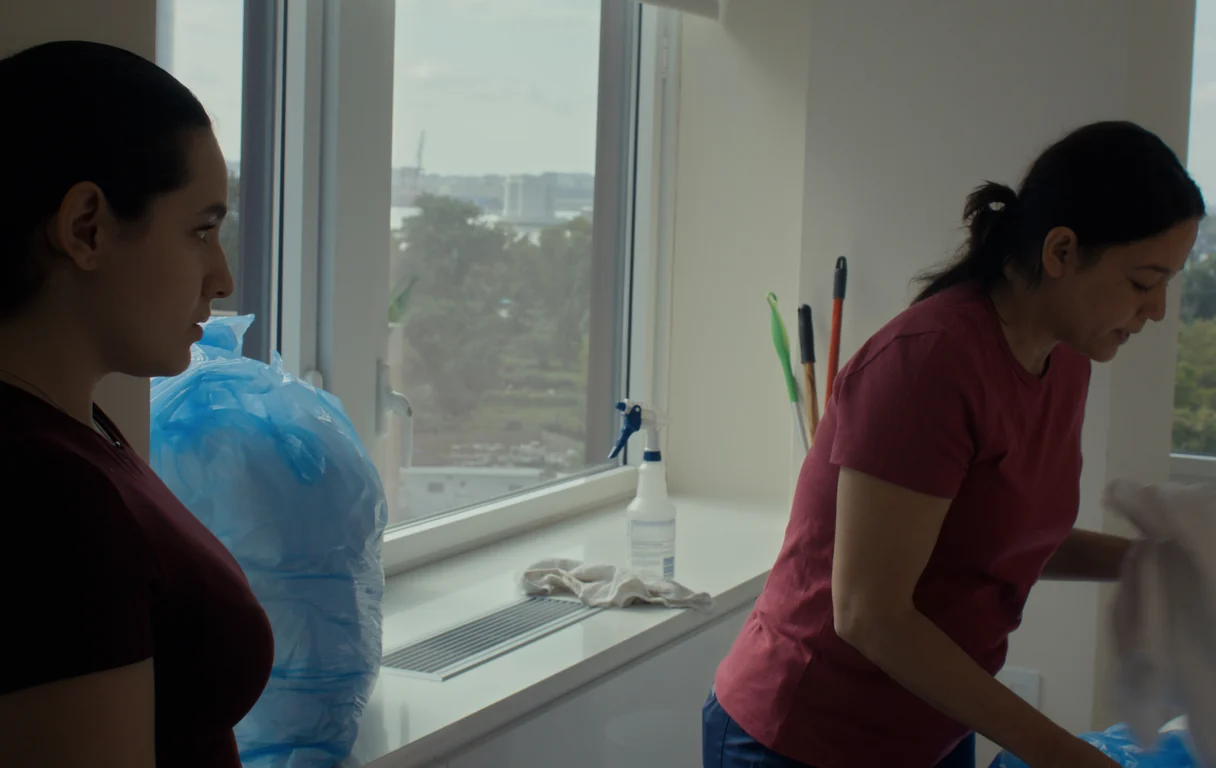
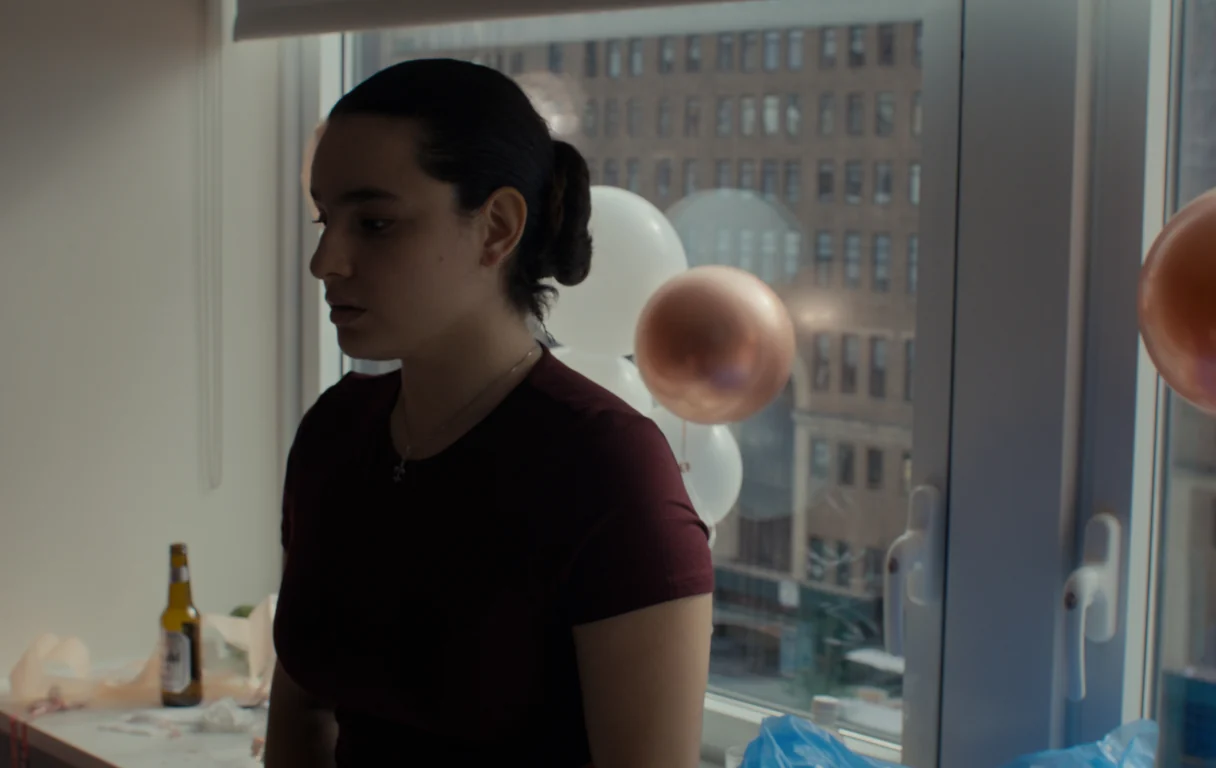
That is the entire story, and twelve minutes turns out to be exactly the right length for it. Shi Zhang wrote and directed it. Almost all of it takes place inside guest rooms on a high floor, which is not a budget decision — it means you spend the whole film looking at New York through glass, from the side of the city that cleans up after everybody else.
The details, in one place
- Title
- In Sanctuary (2026)
- Written and directed by
- Shi Zhang
- Runtime
- 12 minutes
- Country and language
- United States · English
- Cast
- Cristina Villalobos, Ursula Garcia Tinoco, Soulo Smith, Alexander Griffin, Gredivel Vasquez, Huascar Miolan
- My role
- Ximena (supporting)
- Recognition
- Semifinalist, New York Indie Shorts Awards · selected for the New York New Waves Showcase
- IMDb
- View In Sanctuary on IMDb
How I booked the role
There is no good story here, and that is rather the point. No agent phone call, no director who already knew my work, no room I had been in before.
That one I booked through Actors Access.
The same self-submission board that every working actor in this city has sitting open in a browser tab. I read the breakdown, I submitted, I taped, I got the part. After more than twenty years of working in New York, a good share of my screen credits still start exactly that way.
I mention it because actors early in their careers often assume the interesting independent work is behind a door they do not have the key to. Frequently it is not. It is on the board, and the people casting it are looking for someone who is right, not someone who is famous.
What the work was like
Most of my career has been made on a stage, in Spanish, in a theatre where the back row is part of the calculation. A twelve-minute film is a different instrument. Nothing has to travel. The camera is close enough that a thought is enough on its own, and the whole discipline is trusting that and doing less.
Ximena belongs to the working world of the hotel, and the film keeps her there — in the rooms, in the routine, in the middle of a job that does not pause for anyone's feelings. Playing her meant resisting the urge to explain her. She is not there to tell you what the film is about. She is there because that is where she works.
I loved the scale of it. A short film with one clear idea moves quickly, and the people making it are there because they want to be. That is a very good room to act in, and after twenty years I do not take it for granted.
Working with Shi Zhang and the cast
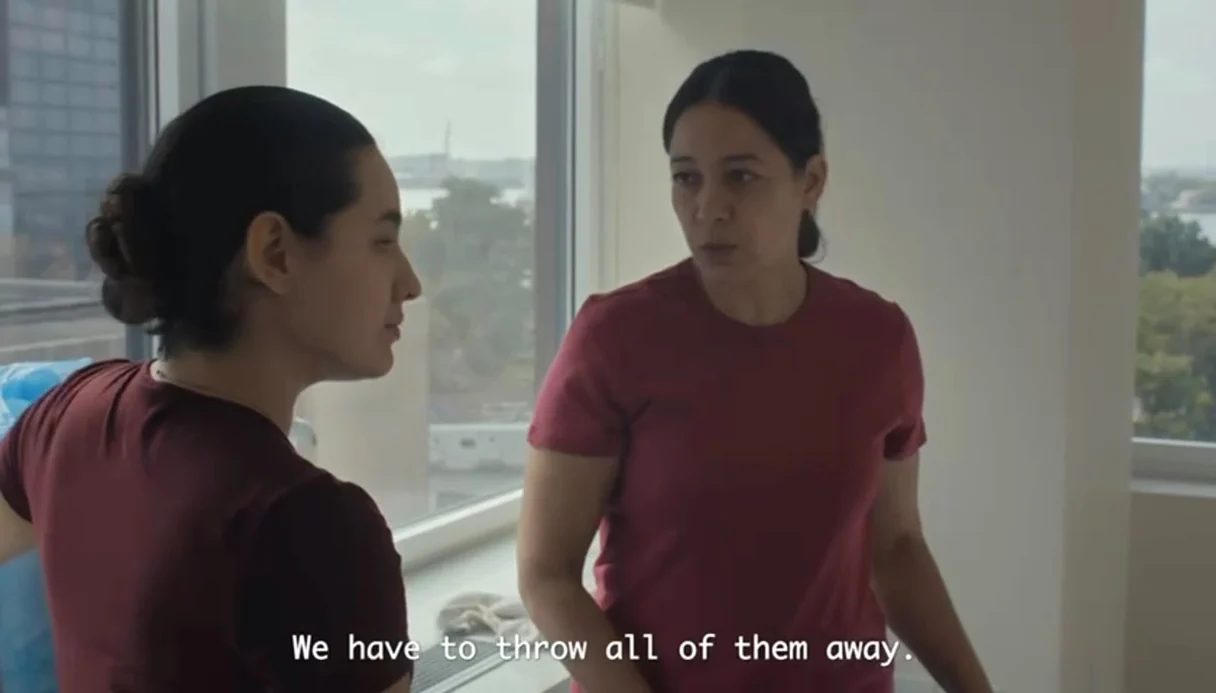
Shi Zhang wrote this and directed it, and you can feel that in how specific it is. When the person guiding the scene is also the person who chose every detail inside it, nobody is guessing at what the film wants. He knows what the story is, he is unhurried about getting it, and he leaves an actor room to find the moment instead of dictating it. That combination is rarer than it should be.
Cristina Villalobos carries the film, and she carries it quietly, which is the harder way to do it. Camila is on screen almost the whole time and a great deal of what she is going through is never said out loud. Watching an actor hold that much without pushing is a pleasure, and it lifts everyone around her. Ursula Garcia Tinoco, Soulo Smith, Alexander Griffin and Huascar Miolan build the world she moves through, and the film is generous with all of them.
It was a warm set. I have been doing this a long time. That is not automatic.
A Latina story told by a Chinese director
This is the part of the film I keep turning over.
It is about a Latina girl, but it was written and directed by a Chinese director.
That combination is unusual, and I think it is the reason the film works. Shi Zhang is not writing from inside the Latina immigrant experience, and he is not pretending to. He is writing from inside a different immigrant experience, and what carries across is the part that is shared: arriving somewhere, being useful to it before you are welcome in it, and doing the arithmetic on what you are prepared to lose in exchange.
Films about Latina domestic workers are usually made by people who look like the characters, or by people who have decided in advance what the audience should feel. This one is neither. It is a story about labor and distance made by someone who understands both from another direction entirely, and that slight angle keeps it from becoming a lecture.
Why it is worth twelve minutes
Because it is about the people you walk past. A hotel is one of the few places where an entire workforce is designed to be invisible to the guests, and the film simply refuses to look away from them. It does that without a speech and without a villain.
Because it is twelve minutes, and it uses all of them. There is nothing padded in it.
And because the sacrifice at the center of it is not dramatic in the way films usually mean. It is the ordinary, unglamorous trade that a great many people in this city make quietly, every week, and rarely get asked about.
I am proud of it. It is a small film that says something true about the people this city runs on and rarely looks at, and it says it without raising its voice.
Where to watch In Sanctuary
In Sanctuary was named a semifinalist at the New York Indie Shorts Awards, and was selected for their New York New Waves Showcase, which streamed online and on demand from August 27 to 30, 2026. That window has now closed.
Next screening: In Sanctuary screens in person on Saturday, October 10, 2026 at 2:00 PM at Cinema Village, in the New York Shorts International Film Festival. I’ll be there. Details and tickets.
There is no public streaming link at the moment. The film has an IMDb page, and it keeps an Instagram account at @insanctuaryshort where festival news is posted first. When there is a way for anyone to watch it, I will update this page with the link.
In the meantime, the rest of my screen and stage work is on my reels and my résumé.
Comments
Leave a Comment
Comments appear right away.