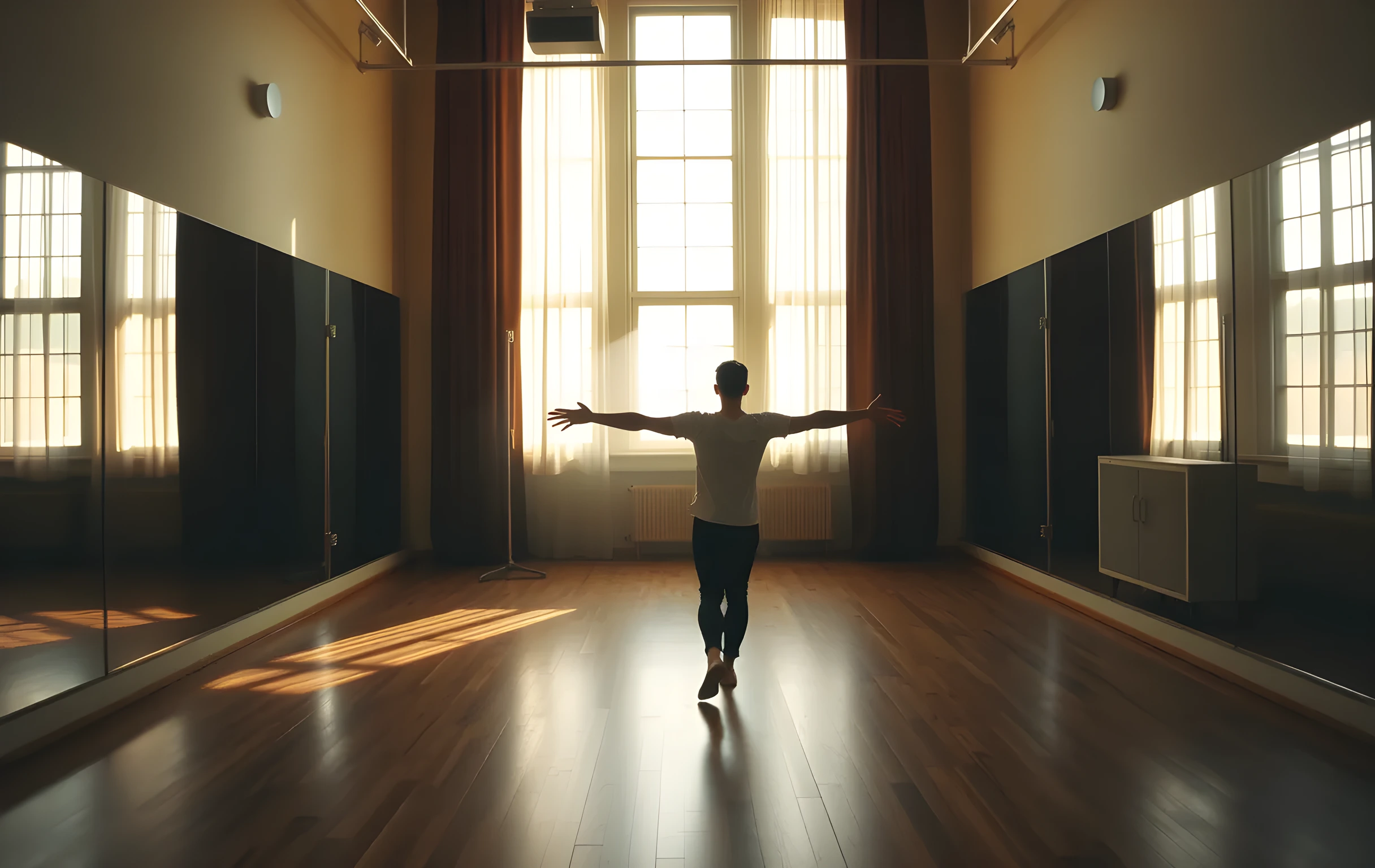
Anclar tu respuesta física
Cuando di mis primeros pasos en un escenario de Nueva York, intentaba fabricar lágrimas apretando las mejillas y forzando los ojos a cerrarse. Esa tensión solo te reseca y atrapa la emoción en la garganta. En su lugar, comienza con tu respiración. Toma una inhalación lenta y diafragmática y permite que tus hombros caigan. La humedad comienza en el sistema nervioso, no en la mente, por lo que tu cuerpo debe sentirse seguro antes de poder soltar.
Enfócate en la sensación física de fatiga ocular en lugar de la idea de tristeza. Parpadea rápidamente durante diez segundos y luego mira hacia arriba a un punto fijo manteniendo la mandíbula completamente suelta. El truco es dejar que las lágrimas caigan sin atraparlas con los párpados. Cuando dejas de luchar contra el goteo, la escena respira naturalmente.
Construyendo la arquitectura emocional
No confundas llorar con interpretar el duelo. El duelo es un estado pesado y persistente, mientras que una lágrima es una liberación fisiológica súbita. Uso la sustitución de manera constante, reemplazando la motivación del personaje con un recuerdo personal que comparta la misma frecuencia emocional. Si la escena requiere un desgarro, busco un recuerdo con ese mismo peso, enfocándome en el peso en mi pecho en lugar de las palabras que necesito decir.
Debes encontrar el momento preciso antes de que llegue la lágrima. En el ensayo, mapeo cuidadosamente el detonante, a menudo usando un detalle sensorial específico como el olor a lluvia sobre el pavimento caliente o el sonido de un tren lejano. Estos anclajes te sitúan en el momento presente y le dan a tu cuerpo una instrucción clara. Cuando llega la señal, simplemente estás siguiendo un camino que ya has recorrido.
Protegiendo tu instrumento vocal
Las lágrimas tensan naturalmente la garganta, y forzar esa tensión dañará tu voz con el tiempo. Siempre mantengo la lengua plana contra el suelo de mi boca y mantengo una exhalación constante cuando sube la humedad. Habla un poco más suave que tu volumen normal y deja que las lágrimas fluyan alrededor de tus consonantes. Tu voz permanecerá clara siempre que te niegues a forzar las cuerdas vocales.
También practico un ejercicio específico de recuperación entre tomas para reiniciar el mecanismo vocal. Bebe agua tibia con miel, tararea una escala suave de tres notas y sacude la mandíbula hasta que los músculos se relajuen. Esto previene la fatiga vocal que afecta a los principiantes que tratan el llanto como un sprint. Protege tu instrumento, y las lágrimas dejarán de sentirse como una carga para comenzar a sentirse como una herramienta.
Ensayando la lágrima con seguridad
No puedes invocar una lágrima genuina en cada toma, e intentarlo agotará tus reservas creativas. Trato el ejercicio como un entrenamiento de memoria muscular, ensayando el detonante solo tres veces al día durante la semana técnica. Mantengo una nota detallada de exactamente qué imagen o señal física funcionó, y luego dejo que el resto de la actuación corra con puro objetivo y acción.
Siempre construye un límite claro entre tu trabajo y tu recuperación. Cuando el director diga corte, sal del personaje inmediatamente, estira tus extremidades y ancla tu presencia en la habitación. Me hago la regla de beber un vaso completo de agua y cambiar mi entorno durante cinco minutos antes de volver al set. Este hábito impide que tu vida emocional se convierta en una residencia permanente.
Comentarios
Deja un Comentario
Los comentarios aparecen de inmediato.