The Free Starting Point Most People Skip
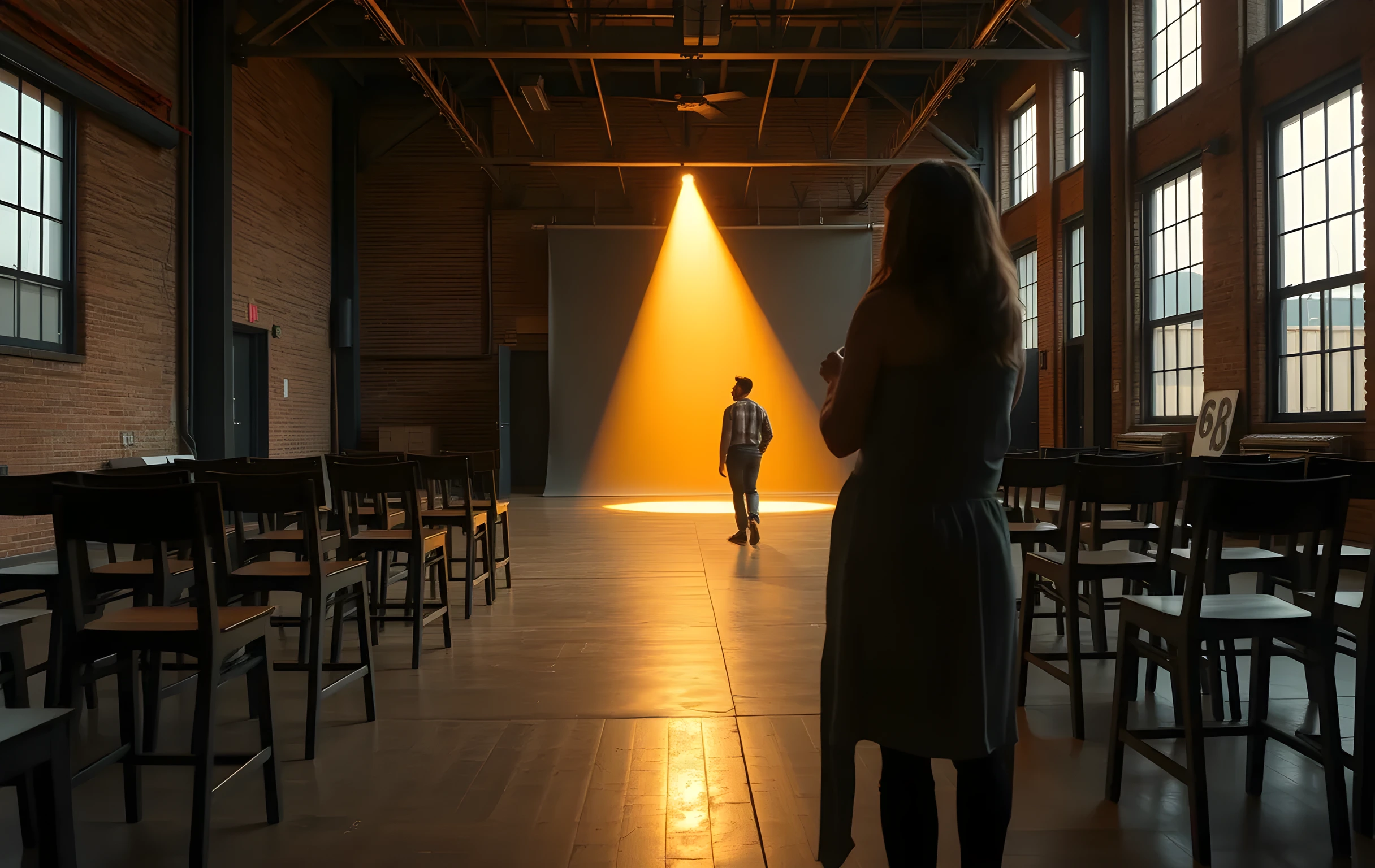
Before you spend a single dollar on a headshot or a class, I need you to go act. Community theaters in every borough of New York will put you on stage for free or ask for a nominal twenty-to-fifty-dollar participation fee. The Brooklyn Academy of Music runs open workshops where you can stand in front of thirty strangers and say your lines out loud with zero financial commitment. In my first two years here, I did not take a single paid class. I was in four community productions, two of them in Spanish because I refused to wait for English-language callbacks that were never coming. That stage time taught me more about pacing, listening, and simply surviving the terror of a live audience than any seminar ever could.
There is also an enormous amount of high-quality material available at no cost. The New York Public Library branches lend acting texts by Stanislavski, Meisner, and Adler on a card you can get with a library ID. YouTube has full-length masterclasses from conservatory faculty who recorded them for their programs. What I am saying is that the foundational education of an actor does not require a tuition check, and pretending otherwise is how the industry keeps selling you something you already own.
The one caveat: free stage time in community theater will not get you a union credit or a reel that a casting director will remember. It gets you comfort with your body in space, tolerance for failure, and a small network of people who will say yes to a read-through on a Tuesday night. That is not nothing. That is the actual foundation.
Classes and Coaching Real Ranges
If you do decide to take structured training, here is what I actually see people paying in this market. A single drop-in workshop at a reputable studio like The Actors Studio or The Juilliard Extension runs between one hundred fifty and three hundred dollars for an evening or a weekend. A full eight-week conservatory-style course at a place like HB Studio or The Neighborhood Playhouse lands somewhere around two thousand to four thousand dollars, which is the price of entry, not the price of mastery. Private coaching with a working actor or a former casting-adjacent teacher runs one hundred fifty to three hundred dollars per hour, and most people do six to ten sessions before they feel like the material has actually stuck in their muscles.
I want to be blunt about what those numbers buy you: a room, a teacher's time, and a structure that forces you to show up on the same day each week. They do not buy you talent, connections, or a career. I have watched brilliant actors who never took a single class outperform graduates of programs charging ten thousand dollars a semester. What training does buy is vocabulary, repetition, and permission to be bad in front of other people without the whole thing feeling like a personal referendum on your worth.
My specific advice after twenty years: spend your first five hundred dollars on one good teacher you trust for six sessions, not on a twelve-week program that will make you feel enrolled. Then go act. The next block of money is better spent on a coach who has actually worked in the medium you want to break into, whether that is episodic television, Broadway, or Spanish-language streaming content. General training gets you to a plateau fast; specific training gets you past it.

Headshots Reels and Audition Materials
A professional headshot in New York will run you between two hundred and eight hundred dollars for a session with prints, depending on the photographer's reputation and whether you are getting one or three looks. I still use photos from a shoot I did in 2014 because they look like me, which is the entire point. A reel, if you do not already have one, can be made for as little as two hundred dollars with a friend holding a phone and good window light, or five to twelve thousand dollars at a production house that shoots it like a short film. The truth is that most casting directors in this market will look at your headshot first, then ask you to read on the spot, and the reel is secondary unless you are trying for commercial or voice-over work.
Wardrobe for auditions is a separate line item people underestimate. You do not need a closet full of options, but you need three to four outfits that cover the range a casting breakdown might call for: one casual, one business-casual, one period-appropriate if you are going for theater. In my experience, two hundred to five hundred dollars at Goodwill and a local thrift shop in the East Village gets you there without looking like you raided a costume department. The one thing I will not compromise on is shoes that let me stand for a forty-minute read-through without my feet screaming.
Transportation is the quiet tax on this whole process. If you live outside Manhattan and your auditions are scattered across the city, budget two hundred to four hundred dollars a month in subway fares, especially in the weeks when callbacks are stacking up. I lived in Bushwick for three years and treated the B train as my commute to work. It was not glamorous, but it was predictable, and predictability kept me sane.
Union Dues and the SAG AFTRA Math
If your goal is screen acting in the commercial or union space, SAG-AFTRA is where you will eventually land. The initiation fee is approximately three thousand dollars, paid in full when you sign your first union contract. After that, monthly dues run around one hundred forty to two hundred dollars depending on your tier and whether you are in good standing. There is also a pension and health contribution that comes out of your paycheck or self-employment income if you are working enough hours to qualify. In practical terms, the first year of union membership can cost you four thousand to six thousand dollars before you have earned a single cent back, and many actors go two or three years in that territory.
The important reframe: you do not pay this fee to become an actor. You pay it when you land a role that requires a union contract, and the production company typically covers part or all of the initiation through their budget. What I am telling you is that the union is a destination in your career, not a prerequisite. You can work for ten years in theater, indie film, student projects, and non-union commercials before SAG-AFTRA ever enters the conversation. Do not let the sticker price make you feel like you are locked out of the profession.
For theater specifically, the equivalent is Actors' Equity Association, whose membership structure is different because it is tied to producing companies rather than individual sign-ups. If you are in a Broadway or Off-Broadway production, the producer handles the paperwork. The cost to you is essentially zero at the point of joining, which is one reason I stayed in theater for so many years before crossing fully into television.
The Costs That Never Appear on a Receipt
There is a category of expense that no budget spreadsheet captures, and it is the one that breaks people. The cost is time: the two years you work part-time at a café or do freelance bookkeeping to keep rent paid while you audition four times a week. The cost is the emotional labor of hearing no from casting offices for months or years before a single yes changes your trajectory. I spent my first eighteen months in New York being told I was too young, then too old, then not ethnic enough for one role and too ethnic for another. None of that shows up as a dollar figure, but it costs you sleep, relationships, and a certain easy faith in the future.
There is also the opportunity cost of your time if you are doing this while working another job. I was a medical transcriptionist for two years while acting at night and on weekends. The money kept the lights on, but the fatigue made my work worse and my auditions thinner. If you can structure your life so that acting has protected hours in it, even two mornings a week, your body will not be running on fumes by the time you walk into a callback. That structural choice is free, but getting it right often means making a hard financial decision about how much other income you can afford to lose.
I tell every actor who asks me this question: budget for three years of modest, consistent spending rather than one year of expensive training and then silence. Three years of community theater, two coaching sessions a month, one good headshot refreshed annually, a used wardrobe, and subway fare will cost you roughly four to seven thousand dollars total if you are frugal and intentional. That is not a fortune. It is a toll you pay for the privilege of building something with your hands and your voice in a city that does not owe you anything.
Comments
Leave a Comment
Comments appear right away.