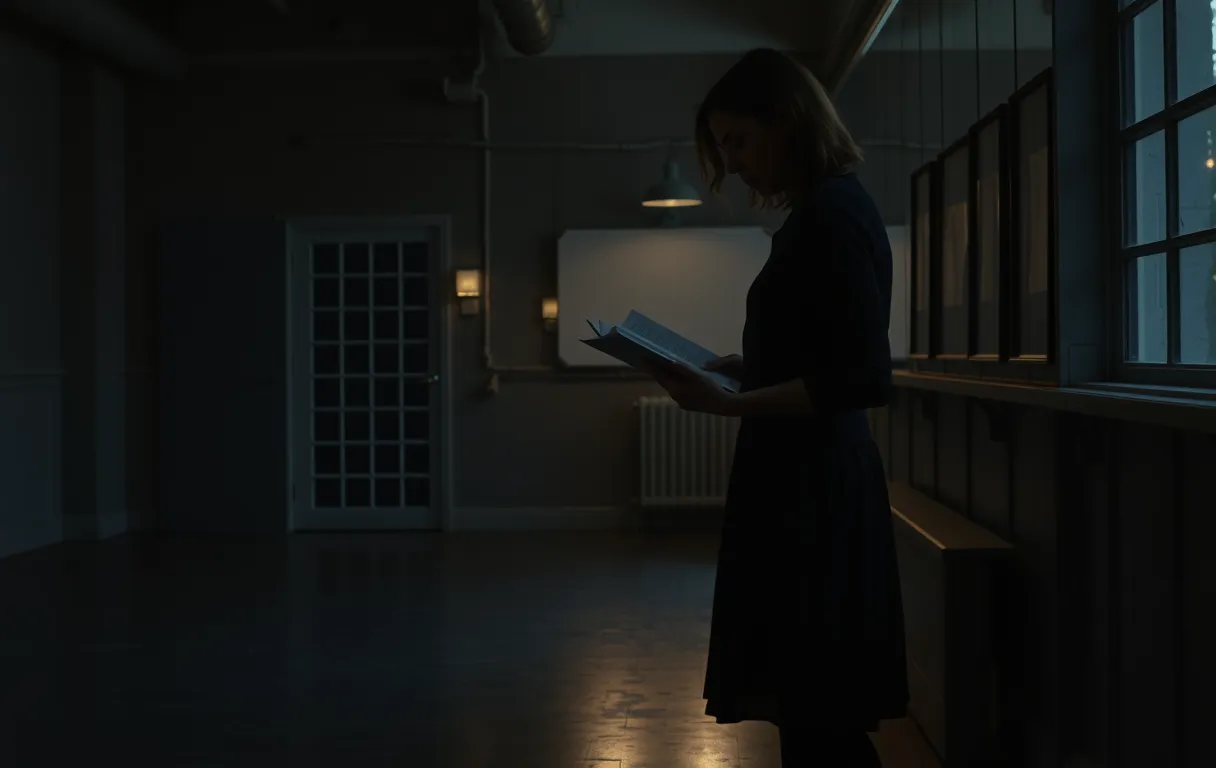
Break the Block Into Beats
You cannot memorize what you do not understand, so start by mapping the emotional geography of your lines rather than chasing syllables. Underline the verb in each line and mark where your objective shifts. When you know what you are doing to the other person, the words follow naturally instead of fighting you.
Assign a clear physical anchor to each shift, such as turning your weight, stepping forward, or picking up a prop. This grounds the memory in your body and prevents you from floating into vague repetition. Meaning always outlasts muscle memory, so treat the lines as actions first and text second.
Practice the block out loud immediately, even if you stumble. Silence keeps the words trapped in your head, while speaking forces your brain to retrieve them under real conditions. Record your first pass so you can hear where the energy dips and reinforce those spots.
Use Movement to Anchor Recall
Physical action bypasses the mental block that usually slows down quick memorization. Walk a straight line across the room and speak one line per step, or change your posture on each shift. Your brain links the cadence of your body to the cadence of your speech, which locks the sequence faster than standing still.
If you are preparing for film, scale the movement down to micro-actions like adjusting your grip or shifting your eyes, but keep the same principle. The key is consistency, so repeat the exact physical choices until they feel automatic. Once the body remembers the rhythm, the words arrive on cue without conscious effort.
Test your recall by running the block with the movement completely reversed. Speaking the lines while walking backward or sitting when the scene calls for standing forces your brain to retrieve the text independently of your physical habits. This exposure guarantees that you will not collapse if a director calls a different blocking.
Record and Reverse Listen
Audio isolation strips away the distraction of the page and forces active recall. Record your lines with long pauses between each cue, then listen while walking or doing dishes. Your brain will naturally fill the silence, and that retrieval practice builds neural pathways far more efficiently than silent reading.
Structure your recording so your partner’s cue plays first, followed by a two-second pause, then your line. Loop the first line until you can deliver it without hesitation, then add the second line, and continue this cumulative chain. This method prevents the common trap of only remembering the beginning of the block.
Reverse the audio once or twice during your final run to break predictive listening. Hearing your own voice backward disrupts your mouth’s muscle memory and proves you actually know the words rather than just repeating them. Flip it forward again and run the block cleanly three times in a row.
Test Yourself Without the Script
Active recall beats passive review every time, so cover the page and speak the lines out loud until you stumble. When you miss a word, do not peek at the script. Reset your breath, state your intention, and deliver the entire sequence again. The friction of retrieval is what actually cements the memory.
Introduce mild stress to simulate performance conditions. Run the block with a timer, speak while your heart is elevated, or ask a colleague to interrupt you between lines. You will quickly discover which phrases are fragile and need more repetition, allowing you to target your weak spots with precision.
Stop memorizing the moment you can deliver the block consistently under pressure. At that point, the work shifts to refinement, and over-rehearsing the text will only stiffen your delivery. Trust the structure you built, step into the space, and let the lines live through your choices.
Comments
Leave a Comment
Comments appear right away.