Stop Monopolizing The Frame Space
Casting directors do not need to see your entire living room or the edge of your ceiling fan. When you stand too close to the lens, you rob the viewer of context and make your face feel aggressive rather than intimate. Keep your head and shoulders centered with enough negative space above your crown to breathe.
Some actors lean in so far that their chin vanishes from the frame. They think they are showing intensity, but they are actually showing panic. Step back until your eyeline matches the camera lens, then let your eyes do the heavy lifting.
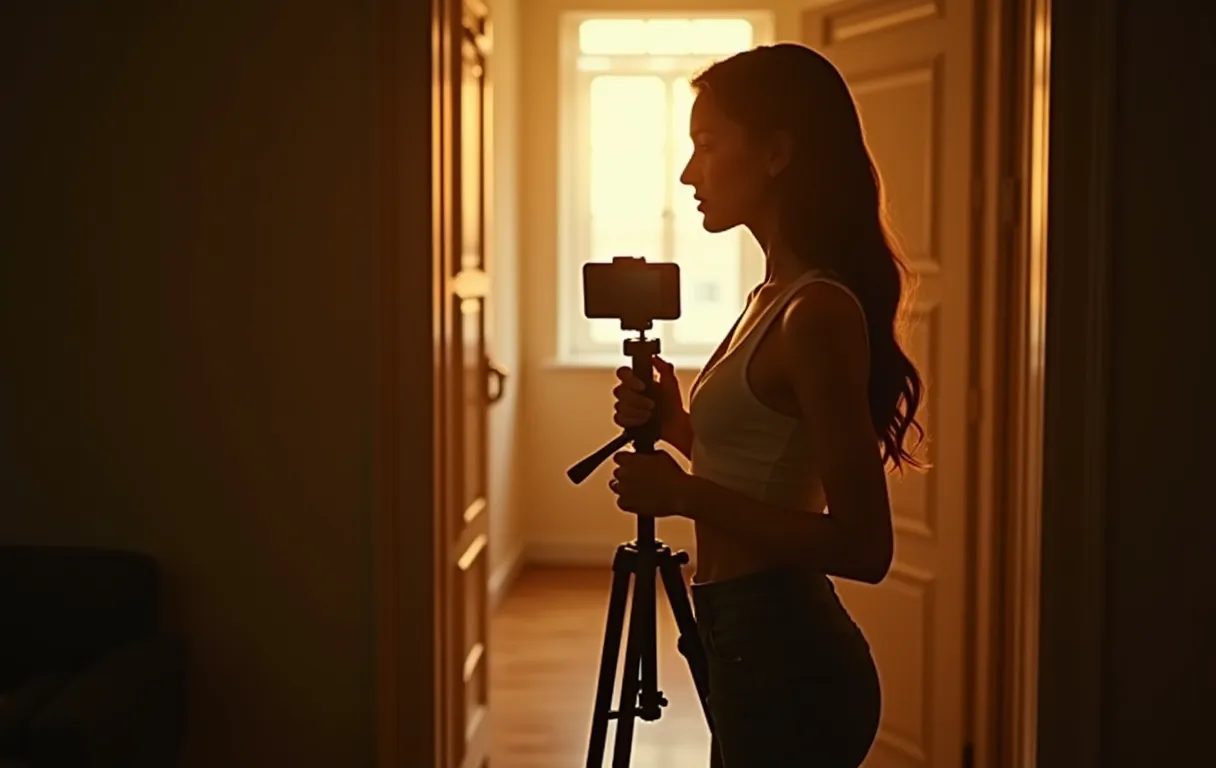
Never Ignore Your Lighting Setup
A dark or unevenly lit tape will get deleted before the first line leaves your mouth. You do not need a Hollywood grip, but you must place a window or a soft lamp directly in front of you, never behind. Backlighting turns your face into a shadow and washes out your subtle expressions.
Move a lamp to your camera height, angle it slightly downward, and bounce it off a white wall if the beam is too harsh. Clear visibility is the baseline of respect for the reader.

Avoid Overdirecting Your Own Camera
Your job is to act, not to become a cinematographer chasing your emotional truth. Once you have locked your frame, turn the camera off and walk away from it completely. Every time you reach for the lens to adjust focus or check your angle, you break the spell you just built.
On stage, nobody adjusts the lights mid scene, and your tape should feel equally continuous. If you need to change your angle, reset the entire setup and start the scene over with fresh energy. Trust that the frame you set initially will hold your performance, and let the casting team see what they need to see.
Skip The Post Tape Editing
Do not add filters or color grade your footage. Trimming dead air at the start and end is fine, but heavy digital alteration distracts from your work. Upload the original video file with clean audio and your character name clearly listed in the filename.
Talented actors can lose roles by trying to polish a tape that was already working. The industry wants to see your raw material, not a manipulated version that looks like a commercial. Keep the file simple, name it properly, and let your performance speak without digital interference.
Comments
Leave a Comment
Comments appear right away.