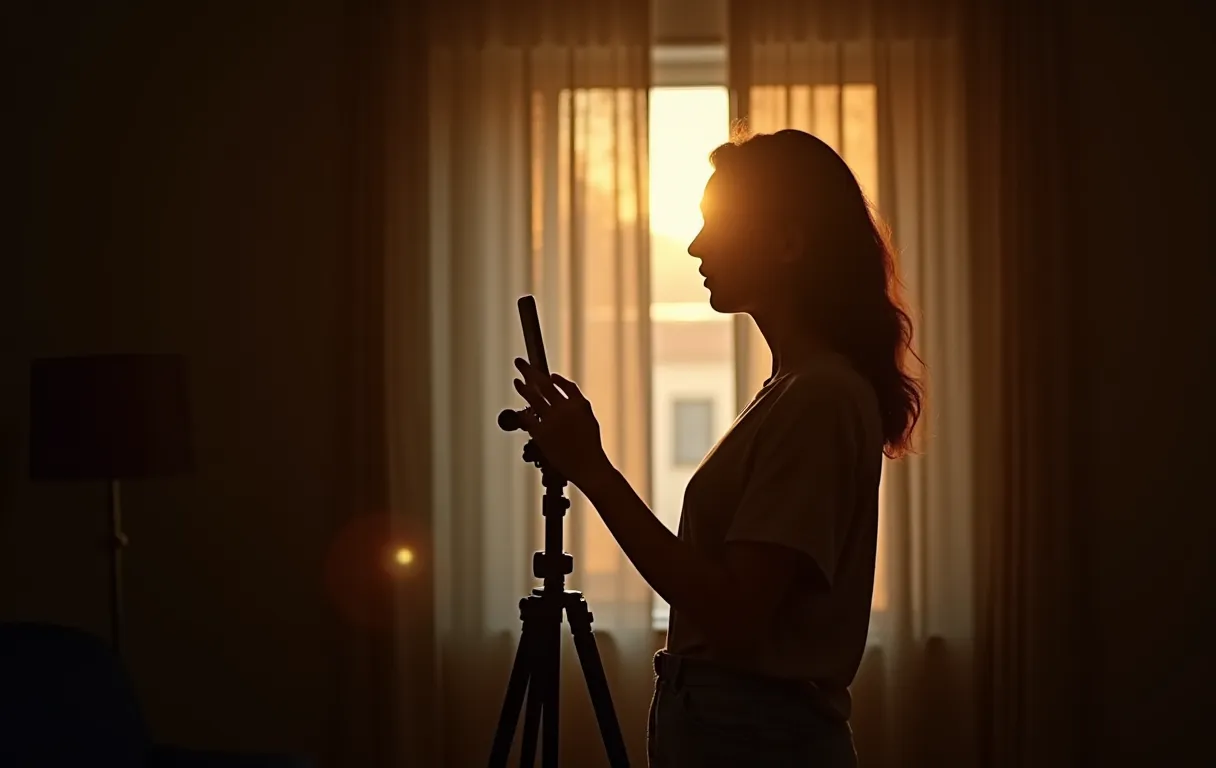
Framing and Background for Clarity
When you set up your camera, think of the frame as a conversation rather than a photograph. I always place the lens at eye level and step back far enough to capture your head and shoulders with a little negative space above your head. This distance allows your eyes to do the heavy lifting and prevents the tight, chest-heavy shots that make directors lose interest quickly.
Your background must be completely neutral and free of movement. I clear off any shelves, close the closet doors, and hang a plain black or dark blue curtain behind me. If you live in a busy neighborhood, close the blinds and turn off any ceiling fans. The casting director needs to focus on your face, not your ceiling fan or the delivery driver outside your window.
Lighting That Flatters Your Features
Natural light from a window is your best friend, but you must position yourself correctly to avoid harsh shadows. I face a large window directly, never with the window behind me, and I keep the blinds open to diffuse the light through a sheer curtain. This setup creates a soft, even glow across my face that mimics a professional softbox.
When natural light fades, I use two inexpensive LED panels placed at forty-five degree angles to my face. The key light goes higher and slightly to one side, while the fill light sits lower on the opposite side to soften the shadows under my cheekbones and jaw. Never place a lamp directly above you, as that will create unflattering pools of darkness in your eye sockets.
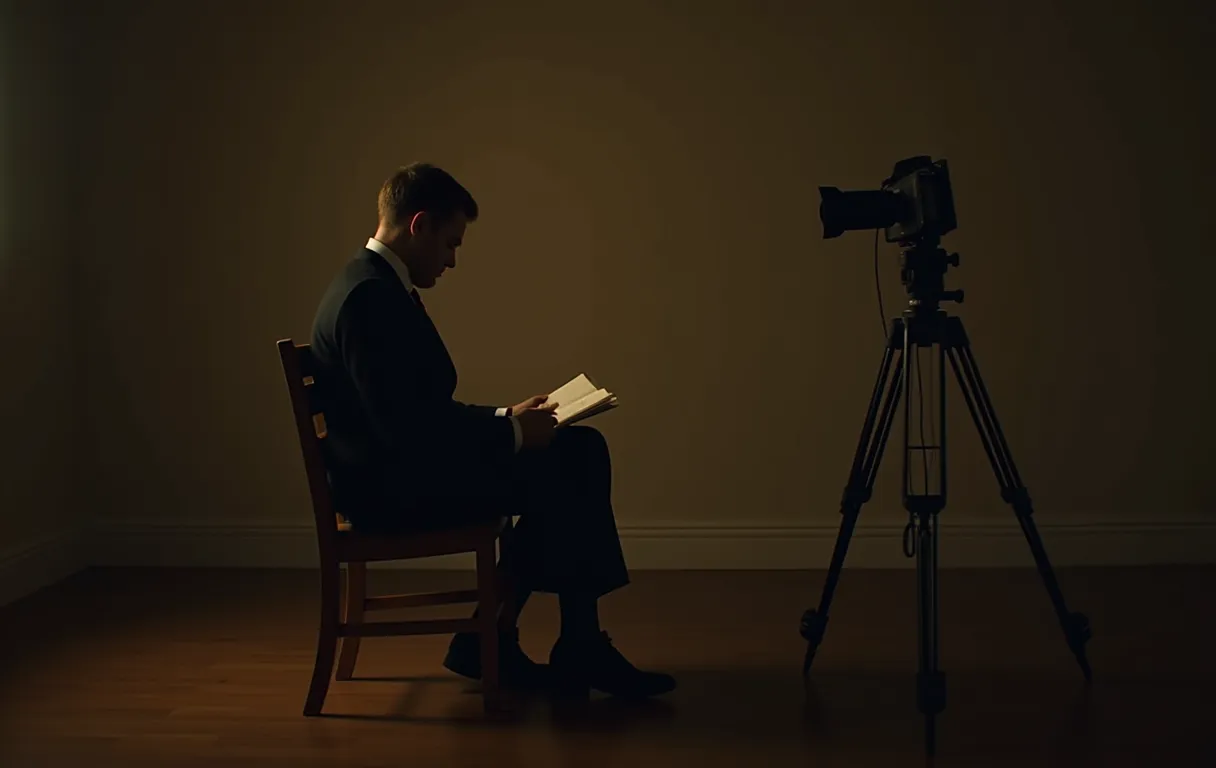
Sound Quality and Mic Placement
Audition readers will forgive imperfect lighting, but they will click away from bad audio immediately. I record in a small, carpeted room with heavy furniture to dampen the echo, and I always silence my phone and close the door. If your phone recorder picks up the hum of your refrigerator, simply pause the taping until the compressor kicks off.
Position the microphone just out of frame, slightly above your head, and angle it toward your mouth. This placement captures the natural resonance of your voice without the plosive pops that happen when you speak directly into a lens. I test the levels by reading a paragraph loudly and whispering the next, ensuring the audio meter stays in the green zone without peaking.
Performance Adjustments for the Lens
The camera magnifies everything, so you must dial back the physicality you would use on a stage. I keep my hands still and rely on micro-expressions in my eyes and mouth to convey emotion. If I find myself moving too much, I imagine a glass wall between me and the lens, which naturally grounds my body while keeping my mind free to act.
Reading sides on a teleprompter app or a printed page requires practice so your eyes never dart around the screen. I place the script directly next to the camera lens and glance down only when absolutely necessary to catch the next line. Trust your preparation, breathe through the pauses, and remember that the casting director wants to see you succeed in this room.
Comments
Leave a Comment
Comments appear right away.